
If you have seen Zwigato, Param Kumar's story will sound familiar. Laid off from his job as a repairman at a Gurugram-based water purifier provider, he now delivers groceries and food for a mobile-based delivery app, in Delhi. Kumar, who started making deliveries last August, told Business Standard that he is working longer hours than his older salaried job as an RO repairman, and has no paid leaves or health insurance. Kumar is part of India's estimated 7.7 million-strong force of gig workers.

Online food delivery platform Zomato has decided to narrow its focus on three key areas of food ordering and delivery; supplies to restaurants through 'Hyperpure' and quick commerce, company Chairman Kaushik Dutta said on Tuesday. In his address to shareholders at the company's annual general meeting, Dutta said the move was part of strategy to focus "only on areas that have the potential to become meaningfully large businesses ten years from now". In FY22, he said Zomato was able to achieve strong top line growth while keeping its "adjusted EBITDA burn under control", despite multiple challenges such as disruptions due to Covid-19 pandemic, macro-economic uncertainty, rising inflation, fuel prices, among others.

After new-age tech companies reported better-than-expected June quarter (Q1FY23) results, analysts said it will be a long road to recovery for their respective businesses and the stock prices. Moreover, brokerages differ on whether it is the right time to own these stocks. The common thread, however, that runs across most brokerages is Zomato, where they suggest buying the stock with the one-year target price ranging between Rs 60 - 115, translating into an upside of around 9 - 109 per cent from the current levels. The company's gross order value (GOV) of food delivery jumped 10 per cent quarter-on-quarter (QoQ) and 42 per cent year-on-year (YoY) in Q1, aided largely by growth in volume, and mild growth in average order value (AOV) at 1-2 per cent. The company also broke even on an adjusted Ebitda basis during the quarter.

Indian startups have raised $42 billion in 2021, up from $11.5 billion in the previous year, a report by Orios Venture Partners said. The report titled 'The Indian Tech Unicorn Report 2021' said India saw 46 unicorns (companies with $1 billion valuations) in 2021 alone, more than doubling the total number of unicorns to 90. These include ShareChat, Cred, Meesho, Nazara, Moglix, MPL, Grofers (now Blinkit), upGrad, Mamaearth, GlobalBees, Acko, Spinny and others. India - with 90 unicorns - is the third-largest unicorn hub behind the US (487) and China (301), and ahead of the UK (39).

Reliance Retail has bought a 25.8 per cent stake in Dunzo, India's leading quick commerce player, for $200 million (around Rs 1,488 crore) as it looks to expand its presence in online grocery delivery business. Dunzo has raised $240 million (about Rs 1,787 crore) in its latest funding round that was led by Reliance Retail Ventures Ltd (RRVL) - the retail arm of Reliance Industries, the two firms said in a statement. Existing investors Lightbox, Lightrock, 3L Capital and Alteria Capital also participated in the funding round.
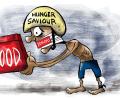
Given that there has been no negative news flow around Zomato, analysts believe it's time to lap up the shares at lower levels.

Live commerce, quick commerce, group buying, WhatsApp commerce, dukaantech have made their mark.
 © 2026 Rediff.com - Investor Information - Advertise with us - Disclaimer - Privacy Policy - Sitemap - Feedback - About us - Terms of use - Grievances